Understanding Resilience
Explore the meta-states and frames that create psychological resilience—and how you can master the inner game of resourcefulness.
The Person is Never the Problem
A foundational principle of Neuro-Semantics
The Frame is Always the Problem
One of the most powerful distinctions in Neuro-Semantics is this: The person is never the problem; the frame is always the problem. This doesn't mean problems don't exist—it means you are not the problem. The problem is the mental frame through which you're interpreting the situation.
A frame is a mental structure—a set of beliefs, assumptions, and meanings—that shapes how you experience reality. When you're in a problem frame, everything looks like a problem. When you're in a learning frame, everything looks like learning. The situation hasn't changed, but your experience of it has transformed.
This is empowering because frames can be changed. You can learn to detect the frames that limit you and set new frames that resource you. This is the essence of resilience training in Neuro-Semantics.
Thoughts About Thoughts
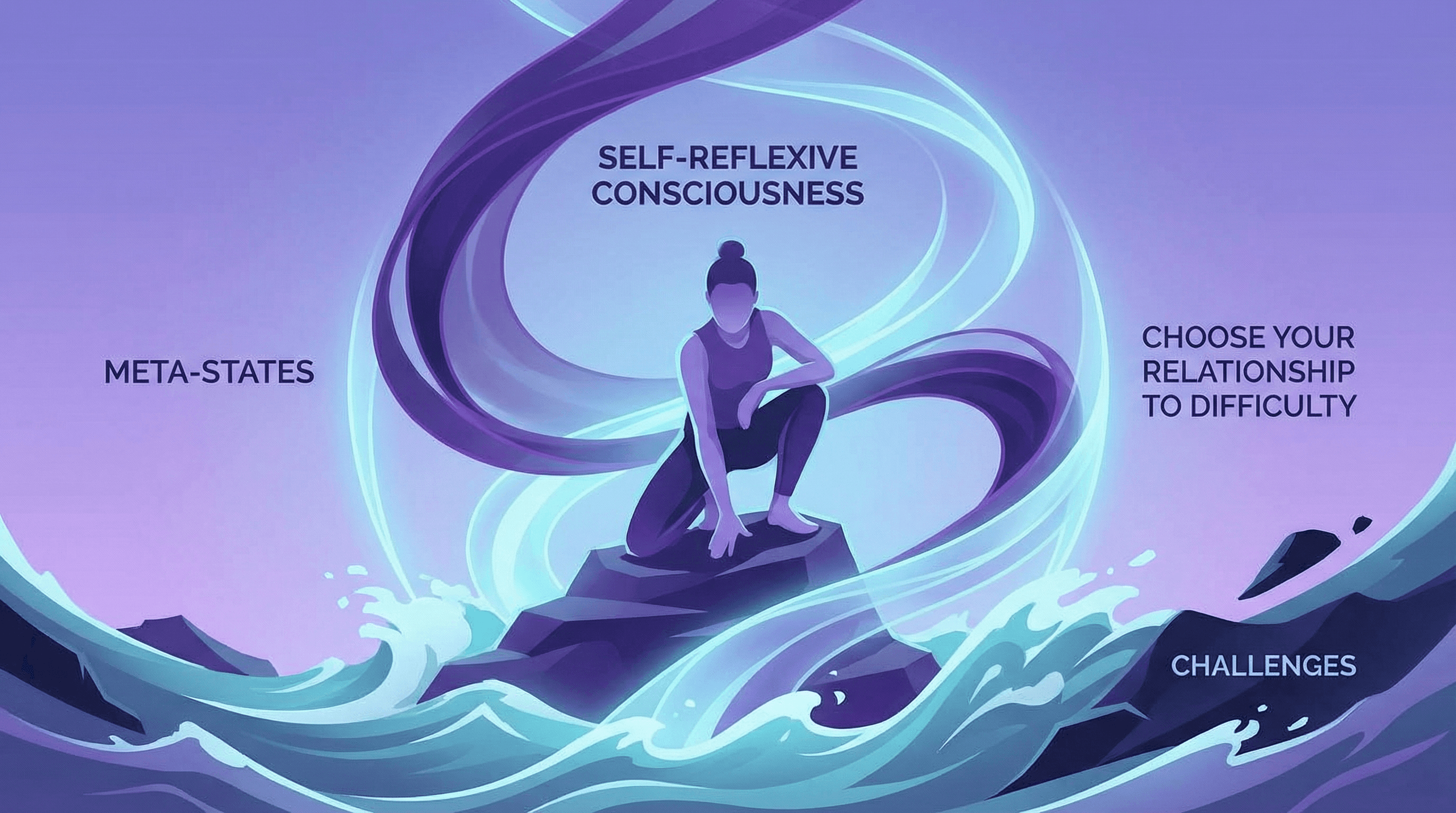
Meta-states are thoughts about thoughts about your difficulties. They create the emotional landscape through which you experience challenges.
Self-Reflexive Consciousness
Humans can reflect on their own thinking. This unique capacity allows you to choose your relationship to difficulty, not just react to it.
Dis-Identification
The ability to step back from problems and realize you are not the problem—you are the person experiencing the problem.
Meta-States and Resilience
The key to emotional mastery
Setting Resourceful Meta-States
Your meta-state determines your emotional resilience
A meta-state is a thought about a thought, or a feeling about a feeling. When you feel anxious about your anxiety, that's a meta-state. When you feel curious about your confusion, that's also a meta-state. The meta-state you set determines your overall emotional experience.
Primary: Feeling overwhelmed
Meta-State: Curiosity about the overwhelm
Result: Opens possibility for exploration
Primary: Experiencing failure
Meta-State: Compassion for the learning process
Result: Maintains self-worth while growing
Primary: Facing uncertainty
Meta-State: Trust that it will work out
Result: Reduces anxiety and increases clarity
Inner Game vs. Outer Game
Both matter, but inner mastery comes first
Inner Game
Your mental and emotional frames—how you interpret, what you believe, what you value.
Focus Areas:
- Meaning-making and interpretation
- Emotional state management
- Self-concept and identity
- Values and beliefs
Outer Game
Your behaviors, skills, and actions in the world—what you do and how you respond.
Focus Areas:
- Problem-solving strategies
- Communication skills
- Decision-making under pressure
- Action and follow-through
The connection: Your inner game determines your outer game. When your mental frames are resourceful, your actions become more effective. Resilience training works on both levels, but starts with the inner—mastering your meanings so your actions flow from clarity rather than reactivity.
Resourceful States for Resilience
Cultivate these meta-states for greater bounce-back-ability
Acceptance
Welcoming reality as it is, without resistance or denial.
Benefit: Reduces suffering and opens the path to wise action.
Curiosity
A genuine interest in understanding and exploring the situation.
Benefit: Transforms threat into learning opportunity.
Courage
The willingness to face difficulty despite fear.
Benefit: Enables movement through obstacles rather than avoidance.
Compassion
Kindness toward yourself and others during difficult times.
Benefit: Prevents self-blame and maintains emotional balance.
Empowering Questions
Questions direct your attention—use them wisely
Reframing
- What else could this mean?
- How might this serve my growth?
- What's the gift in this situation?
Resourcefulness
- What resources do I already have?
- Who could support me?
- What's one small step I can take?
Perspective
- What will I think about this in a year?
- What would I tell a friend in this situation?
- How would my most resilient self respond?
The question behind the question: Quality questions create quality lives. When you face difficulty, notice what questions you're asking yourself. Are they disempowering ("Why me? What's wrong with me?") or empowering ("What can I learn? What's available now?"). The questions you ask determine the meanings you create.
Master Your Inner Game
Work with a Meta-Coach to develop meta-state mastery and build lasting resilience through frame management.